
Extremist flags waved in the streets, groups of striking workers chanted slogans, and politicians were preoccupied with power struggles—Europe is experiencing its worst social unrest in decades. German Chancellor Scholz had previously warned, "In Germany, cooperating with the far right is not trivial." However, this warning failed to prevent hundreds of thousands of people from taking to the streets in recent protests. In September 2025, Germany, France, and the UK—Europe's three largest economies—will all experience large-scale social unrest, the extent of which is shocking.
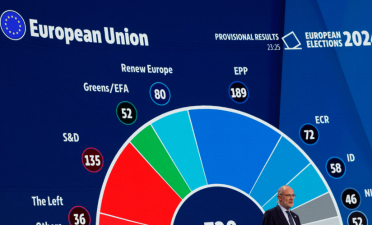
- A Shifting Political Landscape in Germany,The Alternative for Germany (AfD) Emerges as a Powerful Force
Recent changes in Germany's political landscape have attracted attention. According to data released by the Federal Statistical Office of Germany in September 2025, the German economy faces challenges: GDP contracted by 0.3% in 2023 and is projected to decline by a further 0.2% in 2024; the number of bankruptcies is increasing; and the energy crisis and inflationary pressures continue to impact people's livelihoods.
In the North Rhine-Westphalia state elections held on September 14, the AfD's vote share rose significantly from 5.1% five years ago to 14.5%. 1. This most populous German state is considered a "microcosm of German politics," and its election results carry significant indicative value.
- Social contradictions in the UK become more apparent, with immigration policy sparking controversy
On September 13th, one of the largest right-wing demonstrations in recent years took place in London. According to the BBC, the anti-immigrant protests attracted approximately 100,000 participants.
Demonstrators carried Union Jacks and St. George's Cross flags, and some also displayed flags of other countries. Tensions rose, with police clashing with protesters.
- A new wave of strikes erupts in France, with discontent over the fiscal plan
On September 18th, a large-scale strike occurred across France, involving over 500,000 people, including approximately 55,000 in the Paris region. Employees in various sectors, including transportation, education, energy, and healthcare, responded to union calls demanding a "fairer" fiscal plan.
According to Le Figaro, some demonstrations turned violent, and the French Interior Ministry reported over 300 arrests nationwide. The catalyst for this event was the government's proposed draft budget, which included cuts to public spending.
The plan has been opposed by the French National Assembly and the public. The French government is attempting to strike a balance between fiscal budget and the needs of the people.
- Economic hardship is the primary cause, with multiple challenges intertwined
Europe's current problems have deep-seated economic roots. Analysts point out that Europe is dealing with multiple challenges accumulated over the years, including the aftermath of the Eurozone crisis, the COVID-19 pandemic, and geopolitical conflicts.
These factors have led to increased political divisions in parliament, polarized party positions, and fluctuating voter sentiment. Coupled with economic difficulties, the ability of governments to implement major policy changes is limited.
Demographic changes are also putting pressure on European finances, and generational differences are emerging in social divisions, putting pressure on some countries reliant on public pensions to adjust their policies.
- Political forces are reshuffling, with the far right gaining momentum
The political landscape is changing in many European countries. In France, the influence of right-wing parties has increased; in the UK, the Reform Party's support is rising.
The Alternative for Germany (AfD) views immigration as a "national security issue" and has proposed stricter immigration policies, attracting some voters dissatisfied with the status quo.
Some right-wing parties in Europe have formed political groups within the European Parliament, becoming a force to be reckoned with and attempting to advance their political agendas.
- International Influence Looms, Political Ideologies Intertwine
International political ideologies are exerting some influence on Europe. Studies show that support for populist positions in Europe has shifted in recent years.
Technologists sometimes participate in discussions on European political issues, expressing their views on issues such as immigration. During the London demonstrations, some expressed their concerns about immigration through videos.
Some members of the European Parliament believe that the EU needs to maintain independence on sovereignty issues and avoid excessive external influence.
- Governance Capacity Faces Tests, Europe's Future is Full of Challenges
The difficulty of governance has increased in many European countries. While national leaders are still working to address the challenges, governance faces more difficulties.
In countries like France and the UK, financial markets have experienced volatility, and long-term government bond yields have risen, indicating that political instability has affected investor confidence.
The EU, as a supranational organization, also faces challenges. While its legal and decision-making mechanisms promote economic development, they also suffer from lengthy decision-making processes and the need for consensus. Some member states have expressed differing opinions on the EU's role.
London police deployed a large number of officers to maintain order, but several officers were injured in the line of duty, some seriously.
The leader of the Alternative for Germany (AfD) party called the North Rhine-Westphalia election results "a significant development." Analysts believe the party will influence future German policy-making.
Europe faces common governance challenges: difficulty in reaching consensus on the distribution of the fruits of limited economic growth. Policymakers face greater pressure to make decisions.